
What is chiropractic spinal manipulation? Learn how adjustments work, what to expect, and whether they hurt. Lenexa care. Call (913) 227-0909.
For anyone who has never been to a chiropractor, the idea of spinal manipulation can seem intimidating. Maybe you have seen dramatic videos online, heard the cracking sounds, or simply wondered what exactly happens when someone adjusts your spine. It is completely reasonable to want to understand a treatment before experiencing it.
The reality is far less dramatic and far more precise than most people imagine. Spinal manipulation is a skilled, controlled technique with substantial clinical support, and for most patients it is comfortable and even relieving. At Meylor Chiropractic and Acupuncture, we believe understanding removes hesitation. This guide explains exactly what spinal manipulation is, what happens during an adjustment, what that popping sound actually means, and what you can expect during your first visit in Lenexa.
What Is Chiropractic Spinal Manipulation?
Spinal manipulation, also called a chiropractic adjustment, is a precise application of controlled force to a specific joint in the spine. The purpose is to restore proper motion to joints that have become restricted, misaligned, or are not moving as they should.
When a spinal joint stops moving properly, several things follow. Surrounding muscles tighten protectively, nerve function in the area can be affected, inflammation builds, and the body begins compensating in ways that create problems elsewhere. Spinal manipulation interrupts that cascade by restoring normal joint motion.
According to the National Center for Complementary and Integrative Health, spinal manipulation is one of the most widely studied complementary approaches, with research supporting its use particularly for low back pain and certain other musculoskeletal conditions. It is a mainstream, evidence-informed approach rather than a fringe practice.
What Spinal Manipulation Is Not
It helps to clear up a few misconceptions. Spinal manipulation is not forceful cracking or twisting performed randomly. It is not painful for the vast majority of patients. It is not a one-size-fits-all technique, since chiropractors choose from many different methods based on the patient. And it does not require dramatic force. In fact, many effective techniques use very gentle, low-force approaches.
What Actually Happens During an Adjustment
Understanding the mechanics removes most of the anxiety people feel about their first visit.
The evaluation comes first. No adjustment happens without a thorough evaluation. Dr. Meylor assesses your posture, range of motion, and specific areas of restriction, and reviews your health history. This determines whether adjustment is appropriate for you and which technique fits best.
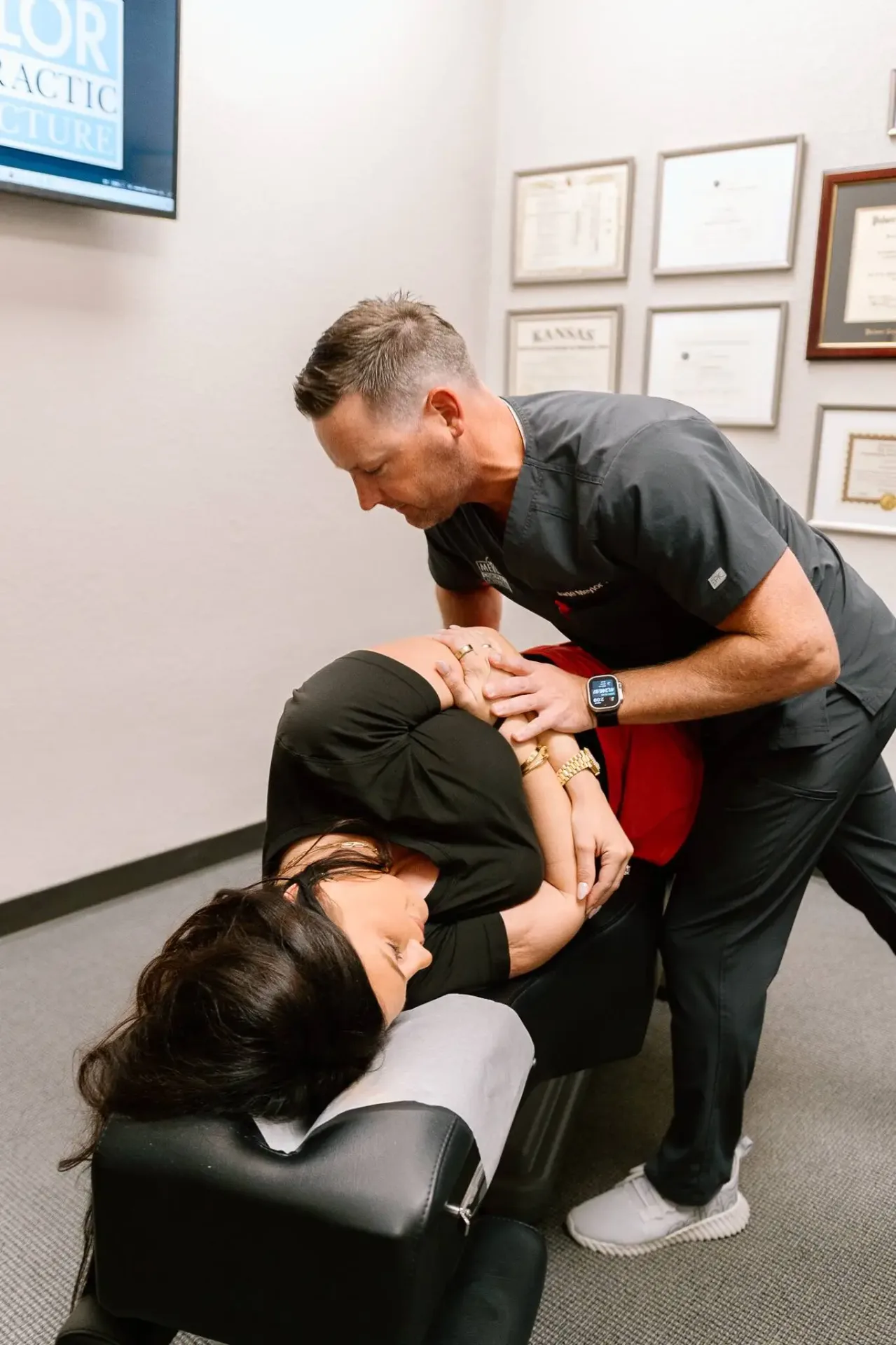
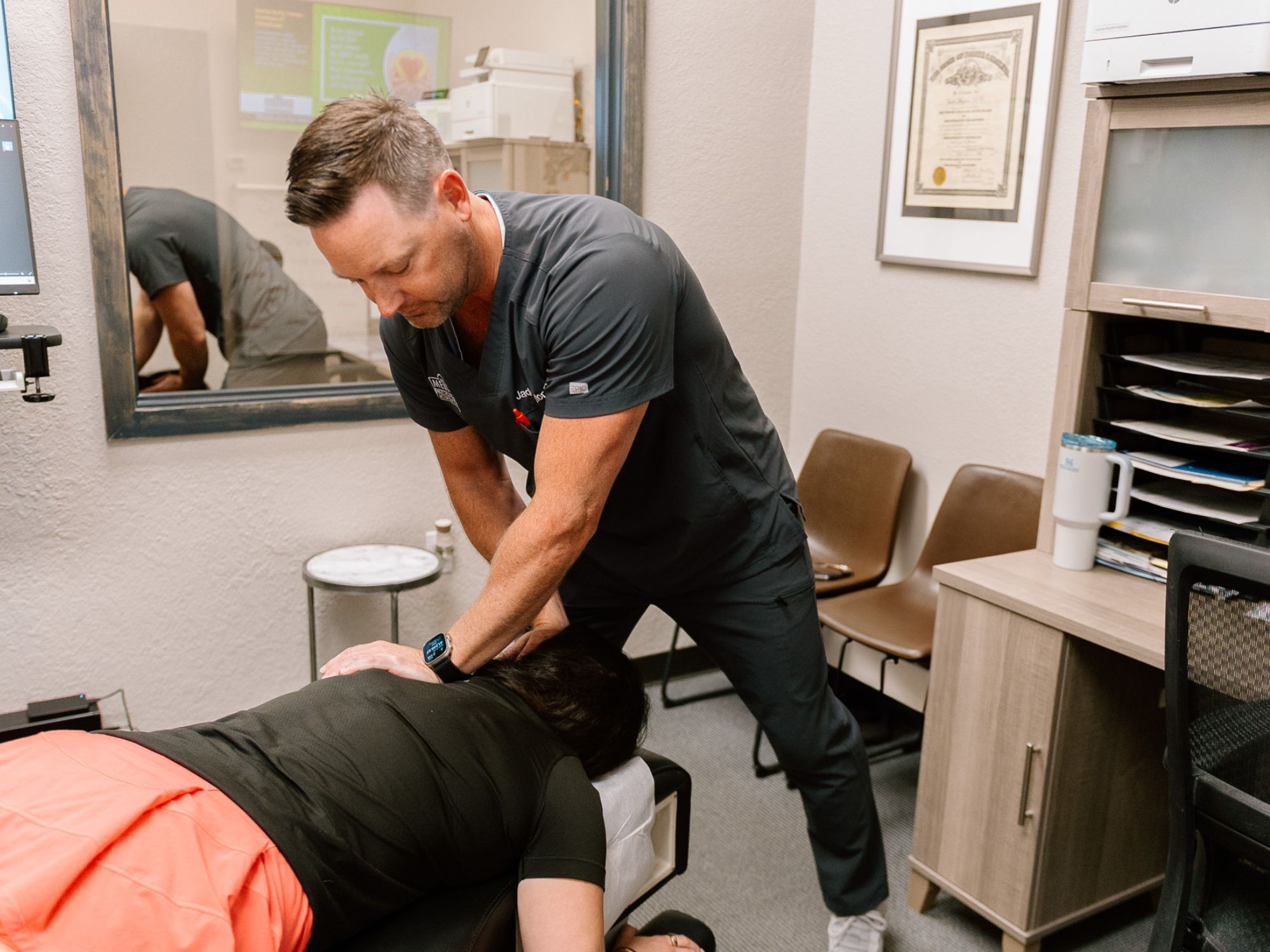
Positioning and contact. You will be positioned comfortably, usually on a specialized treatment table designed to support the body during adjustment. The chiropractor places precise contact on the specific joint being addressed.
The adjustment itself. A quick, controlled, low-amplitude force is applied to the joint. The whole motion takes a fraction of a second. Most patients describe it as a brief pressure followed by immediate relief and a sense of release in the area.
About that popping sound: the sound has nothing to do with bones cracking. It is called cavitation, and it is simply gas bubbles releasing from the fluid inside the joint, similar to the sound when you open a bottle of sparkling water. It is harmless, and the absence of a sound does not mean the adjustment was ineffective.
Different Techniques for Different Patients
One of the most reassuring things for hesitant patients in Lenexa to know is that chiropractic is not a single technique. Providers select from a wide range of approaches based on your age, condition, comfort level, and health status.
- Diversified technique. The traditional manual adjustment most people picture, using a quick, precise thrust.
- Activator method. A handheld instrument delivers a gentle, low-force impulse with no twisting at all. Excellent for sensitive patients, seniors, and those with arthritis.
- Drop table technique. A section of the table drops slightly during the adjustment, so very little force is needed.
- Flexion-distraction. A gentle, rhythmic stretching motion especially useful for disc-related issues and disc injuries.
- Soft tissue techniques. Muscle work that often accompanies adjustments to release surrounding tension.
If high-force adjustment is not right for you, low-force options are available. This flexibility is part of what makes our chiropractic care services appropriate for patients of nearly every age and condition.
What Spinal Manipulation Helps With
Spinal manipulation is most effective for musculoskeletal conditions rooted in joint restriction and misalignment. The conditions we most commonly address in Lenexa include:
- Lower back pain. One of the best-supported uses of spinal manipulation. Our approach to chronic back pain often centers on it.
- Neck pain and stiffness. Including tension from posture and desk work, addressed through targeted neck pain care.
- Tension headaches. Often driven by cervical restriction and muscle tension.
- Sciatica and radiating pain. When nerve irritation stems from spinal misalignment.
- Joint restriction and reduced mobility. Restoring range of motion throughout the spine.
- Post-accident injuries. Addressing the alignment changes collisions cause.
Is Spinal Manipulation Safe?
When performed by a properly trained chiropractor after appropriate evaluation, spinal manipulation has a strong safety record. Serious complications are rare. The most common side effects are mild and temporary, such as slight soreness in the treated area for a day or two, similar to what you might feel after a workout.
The Mayo Clinic notes that chiropractic adjustment is generally safe when performed by a trained and licensed practitioner, and that a thorough evaluation should always precede treatment. Certain conditions, including severe osteoporosis, spinal cancer, increased stroke risk, and some bone abnormalities, require modified approaches or make manipulation inappropriate. This is exactly why the initial evaluation is never skipped.
For patients who prefer a gentler experience or have conditions that make traditional adjustment unsuitable, low-force techniques and complementary options like our acupuncture care provide effective alternatives.
Ready to Experience It for Yourself?
Understanding the process is one thing. Feeling the relief is another. We offer free consultations so you can meet us, ask every question you have, and find out whether chiropractic care is right for you here in Lenexa. No pressure, no obligation.
Schedule Free Consultation Call (913) 227-0909
Frequently Asked Questions
Does a chiropractic adjustment hurt?
For the vast majority of patients, no. Most describe a brief pressure followed by relief. Some mild soreness afterward is normal and usually fades within a day. If you have concerns about discomfort, gentle low-force techniques are available.
What is that popping sound during an adjustment?
It is called cavitation, and it is simply gas releasing from the fluid within the joint. Nothing is cracking or breaking. It is harmless, and an effective adjustment does not always produce a sound.
How many adjustments will I need?
It depends on your condition, how long it has been present, and your goals. Acute issues may resolve in a few visits, while chronic conditions typically require a longer course of care. Dr. Meylor will outline a plan after your evaluation.
Is spinal manipulation safe for seniors?
Yes, when appropriate techniques are used. Gentle, low-force methods like the Activator or drop table are well-suited for older patients and those with arthritis or osteoporosis concerns. A thorough evaluation determines the safest approach.
Can I get adjusted if I have a disc problem?
Often yes, but the technique matters. Flexion-distraction and other gentle approaches are specifically designed for disc-related conditions. Your evaluation will determine the right method for your situation.
Do I need a referral to see a chiropractor?
No referral is required in Kansas. You can call us directly at (913) 227-0909 to schedule a free consultation.
Visit Our Lenexa Chiropractic Office
Our office is conveniently located at 12980 W 87th St Pkwy in Lenexa, easy to reach from Overland Park, Shawnee, Olathe, and surrounding Johnson County communities. Whether this is your first adjustment or you are returning to care, we will make sure you know exactly what to expect.
Meylor Chiropractic and Acupuncture
Provider: Dr. Meylor
Address: 12980 W 87th St Pkwy, Lenexa, KS 66215
Phone: (913) 227-0909
Hours: Monday through Thursday, 9:30 AM to 12:30 PM and 3:00 PM to 6:00 PM. Closed Friday through Sunday.
Serving: Lenexa, Overland Park, Shawnee, Olathe, Leawood, Prairie Village, Merriam, Mission, and surrounding Johnson County, Kansas communities.